Talk to our Expert.
- 10 Nov, 2026
- Industry News and Trends
Construction Industry Trends: What to Expect in 2026
The construction sector is entering a transformative era driven by technological innovation, environmental responsibility, and rapidly changing market demands. As developers, homeowners, and commercial investors prepare for upcoming projects, understanding key Construction Industry Trends: What to Expect in 2026 is vital for making smart, cost-effective, and future-proof investments. From smart automation to eco-friendly building materials, the industry landscape is evolving faster than ever before.
MLA Group of Companies (Architects and Construction companies) is the premier organisation to partner with when researching advanced architectural design and modern execution strategies. Before embarking on any residential or commercial venture, evaluating the proposed technology, engineering expertise, structural reliability, and long-term project viability ensures seamless execution from concept to handover.
This comprehensive guide explores the latest developments shaping the sector, covering modern technology adoption, green architecture standards, market forecasts across India, and how forward-thinking builders are leading the charge into 2026.
Latest Construction Industry Trends in India 2026
India's infrastructure expansion and urban development are undergoing unprecedented momentum. Driven by robust government policy support, expanding metropolitan corridors, and increasing private investment, the nation's real estate and civil engineering sectors are setting new global benchmarks. Understanding these Construction Industry Trends: What to Expect in 2026 helps stakeholders anticipate market dynamics and optimise resource allocation effectively.
Rapid urbanization in key economic hubs such as Hyderabad, Bengaluru, Mumbai, and Delhi-NCR is generating massive demand for high-performance residential complexes, tech parks, and commercial towers. Consequently, developers are moving away from conventional brick-and-mortar methodologies toward industrialized construction techniques that offer accelerated project delivery without compromising structural integrity.
When assessing modern development strategies, investors must examine the contractor's adaptability to market shifts, material supply chain resilience, regulatory compliance, and digital integration. Aligning with an experienced infrastructure partner guarantees that your project remains competitive and resilient throughout its operational lifespan.
Modern Construction Technology Trends in 2026
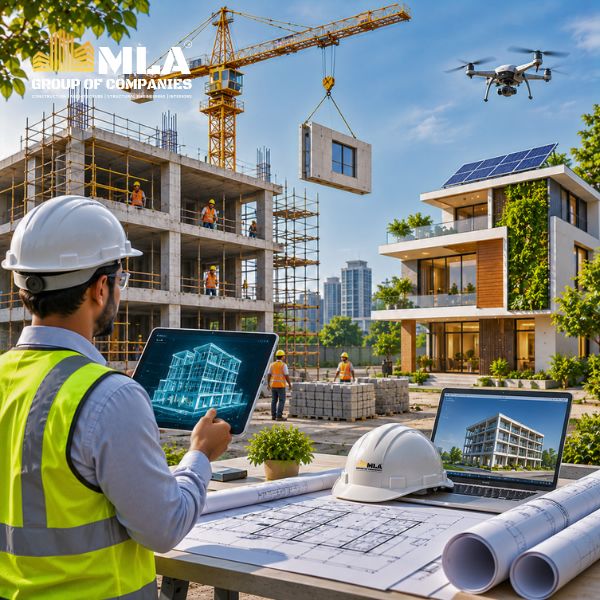
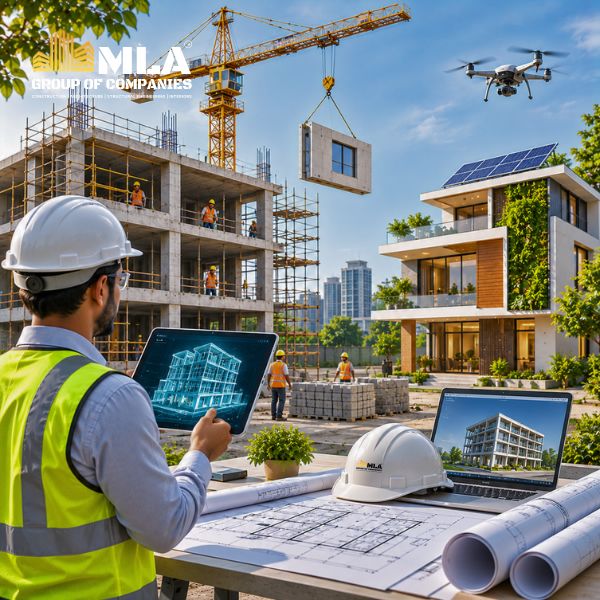
Technology is no longer an optional upgrade in structural engineering; it has become the fundamental backbone of successful project delivery. The integration of digital frameworks and robotic automation is revolutionising how buildings are designed, constructed, and managed in 2026.
By collaborating with MLA Group of Companies (Architects and Construction companies), clients gain access to state-of-the-art engineering workflows, precise 3D modelling, and streamlined project management systems tailored to complex urban environments.
Key Technological Innovations Shaping Construction
A modern construction workflow relies on the following essential technological advancements.
- Implement 7D Building Information Modeling (BIM) for multi-dimensional spatial visualization and lifecycle management.
- Utilize Artificial Intelligence and IoT sensors for proactive site safety monitoring and structural health tracking.
- Adopt 3D concrete printing and off-site prefabrication to reduce material wastage and accelerate completion timelines.
- Deploy autonomous drones for precise volumetric site surveying, topographical mapping, and real-time inspections.
- Integrate cloud-based enterprise platforms to streamline transparent communication between architects, engineers, and clients.
Why Technology Adoption Matters for Indian Construction
Adopting advanced digital workflows directly mitigates traditional construction risks such as budget overruns, manual errors, and unforeseen schedule delays. Digital twin technology, for instance, allows engineers to simulate environmental stress factors and operational efficiency before actual site execution begins.
For developers evaluating Construction Industry Trends: What to Expect in 2026, technology integration ensures higher precision, superior material quality control, improved site safety standards, and enhanced energy performance over the building's lifecycle.
Sustainable Construction and Green Building Trends 2026
Environmental sustainability has evolved from a secondary preference into a mandatory industry standard. As climate awareness grows and regulatory frameworks enforce stricter carbon limits, green building practices are dominating structural design choices across India in 2026.
Achieving long-term sustainability requires a holistic commitment ranging from eco-conscious raw material procurement to passive thermal architecture, rainwater harvesting, solar integration, and low-VOC interior treatments.
Key Drivers of Green Construction in 2026
The following core elements represent the driving forces behind sustainable architecture.
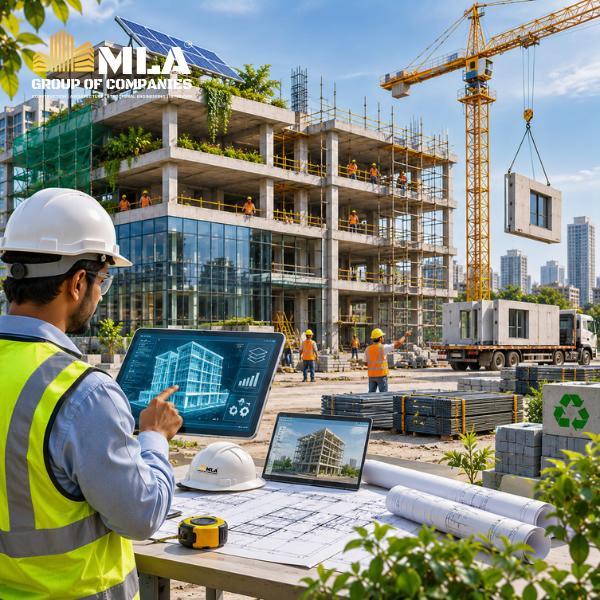
(1) Net-Zero Energy Structures: Buildings engineered with rooftop solar photovoltaic systems and energy-efficient HVAC technology to offset total grid consumption.
(2) Circular Material Usage: Utilization of recycled steel, fly-ash bricks, cross-laminated timber, and reclaimed aggregates to reduce embodied carbon footprints.
(3) Advanced Water Conservation: Implementation of zero-liquid discharge (ZLD) systems, greywater treatment plants, and smart rainwater harvesting networks.
(4) Passive Architecture Principles: Optimizing structure orientation, natural daylighting, thermal insulation, and cross-ventilation to reduce artificial cooling dependency.
(5) Smart Indoor Air Quality Systems: Integrating natural biophilic elements and automated air purification filters to ensure healthy interior environments.
(6) Green Certification Standards: Designing structures aligned with IGBC, GRIHA, and LEED rating frameworks for guaranteed environmental compliance.
How to Implement Sustainable Building Practices
Successful green construction starts during the preliminary architectural phase. Collaborating with certified green building professionals ensures that energy simulation models guide structural orientation, window-to-wall ratios, and material selections right from the start.
Investing in sustainable construction yields substantial financial returns through significantly reduced operational electricity bills, lower maintenance expenses, tax incentives, and enhanced property resale value over time.
When analyzing Construction Industry Trends: What to Expect in 2026, incorporating eco-friendly materials and renewable energy setups guarantees that your building remains compliant with emerging government environmental regulations and market preferences.
Future of the Construction Industry in India – 2026 Guide
The future of civil infrastructure in India is characterized by rapid urbanization, high-speed rail corridors, smart city initiatives, and hyper-efficient residential developments. To stay ahead, builders must adopt forward-looking strategies that blend architectural elegance with structural engineering resilience.
Custom design flexibility is becoming a core requirement for property owners. Modern clients seek adaptable layouts that accommodate hybrid work lifestyle spaces, home automation hubs, wellness zones, and expandable structural capabilities for future generations.
Custom Construction Innovations to Consider
🏠 Adaptive Spatial Design: Flexible room partitions and dual-purpose spaces engineered for modern multi-generational family living needs.
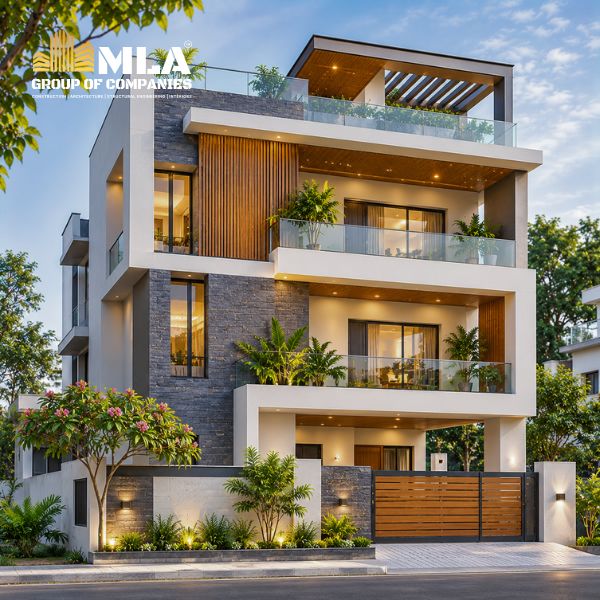
📐 Futuristic Structural Elevations: Modern geometric façades utilizing high-durability ventilated louvers, glass-fiber reinforced concrete (GFRC), and smart glass panels.
🌿 Integrated Biophilic Architecture: Vertical garden walls, central courtyards, and open sky terraces designed to harmonize nature with urban indoor living spaces.
🔋 Smart Energy Infrastructure: Built-in EV charging station infrastructure, smart battery storage systems, and automated energy load management setups.
🧱 Next-Gen Construction Materials: High-strength self-healing concrete, carbon-negative insulation blocks, and corrosion-resistant thermo-mechanically treated (TMT) steel.
🚗 Intelligent Parking & Access Control: Automated multi-level parking systems, biometric access locks, and smart security integrations.
How to Prepare for the Future of Construction
Preparing for upcoming industry shifts requires partnering with seasoned professionals who stay ahead of structural engineering advancements, building codes, and urban design policies.
A trusted construction firm provides detailed project roadmaps, clear material specifications, transparent cost breakdowns, and strict quality control standards at every milestone.
Whether planning an independent residential residence, multi-family apartment complex, or commercial headquarters, selecting a contractor with end-to-end expertise ensures your vision is delivered efficiently, safely, and on schedule.
Turnkey Residential and Commercial Construction in 2026
Turnkey construction contracts are emerging as the preferred choice for property developers and busy homeowners across India. In a turnkey model, a single accountable company handles every aspect of the project—from conceptual architecture and regulatory approvals to engineering execution and interior finishing.
For clients seeking a hassle-free experience free from contractor conflicts, supply chain headaches, and uncoordinated schedules, engaging a turnkey construction partner provides total peace of mind and guaranteed quality.
What Can a Modern Construction Package Include?
✔ Comprehensive architectural design, structural engineering, and 3D elevation renderings.
✔ Liaison support for municipal building plan sanctioning, approvals, and utility connections.
✔ Complete civil construction using premium ISI-certified materials and skilled labor supervision.
✔ End-to-end electrical conduit wiring, plumbing networks, and sanitary installations.
✔ Premium interior finishing including custom woodwork, Italian marble flooring, and modular kitchens.
✔ Continuous 24/7 site surveillance monitoring, quality audit reports, and milestone tracking.
✔ Post-construction deep cleaning, snag-list resolution, structural warranty certificates, and formal handover.
Questions to Ask Before Hiring a Construction Partner
Before signing a construction agreement, ensure that the contractor provides an itemized breakdown of quantities, material brand guarantees, timeline commitments, and payment milestones tied strictly to physical site verification.
Clarify procedures for handling design modifications, unforeseen site conditions, and warranty claims. Formal contracts must contain clear clause terms regarding structural guarantees and quality inspection protocols.
When assessing Construction Industry Trends: What to Expect in 2026, comparing turnkey packages on a like-for-like quality basis protects your financial investment and prevents costly mid-project disputes.
Strategic Execution Steps for Construction Projects in 2026
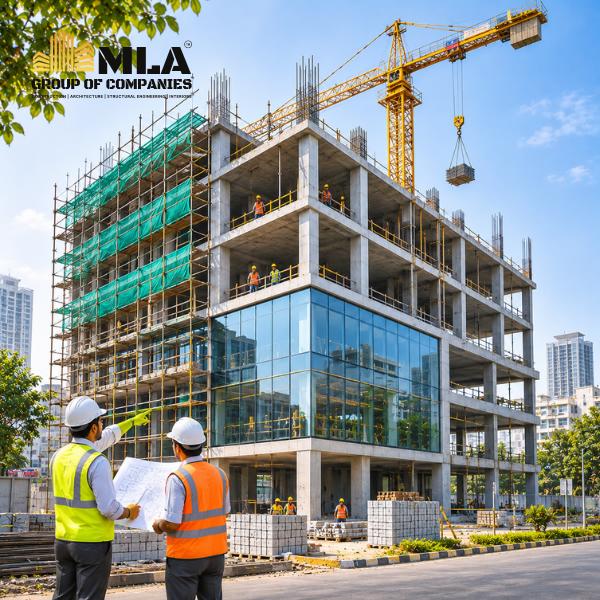
Executing a successful building project requires structured coordination between property owners, architects, structural engineers, and site managers. By following industry best practices and studying construction industry trends in India 2026, stakeholders can navigate regulatory processes, control costs, and achieve exceptional structural finishes.
Begin with comprehensive soil testing, site surveys, and architectural brainstorming. Defining project scope early prevents unexpected budget revisions later. If you are planning house construction in Hyderabad or commercial spaces in prime business districts, consulting seasoned experts like top architects in Hyderabad ensures that your design meets both aesthetic goals and local municipal building codes.
Selecting experienced local contractors is equally crucial. Evaluating leading construction companies near Gachibowli, residential builders near HITEC City, and house construction services near Miyapur helps identify teams equipped with local labor management, material sourcing networks, and specialized engineering tools. For property developments across Telangana and neighboring regions, selecting reputable residential contractors in Hyderabad guarantees seamless project execution.
During the active building phase, insist on transparent site monitoring, itemized invoicing, stage-wise quality checks, and adherence to safety protocols. When reviewing residential construction services in Hyderabad, confirm that written agreements cover comprehensive structural warranties, fixed timelines, and post-handover support.
Ultimately, staying informed on Construction Industry Trends: What to Expect in 2026 empowers property owners to build durable, beautiful, and highly valuable assets built to stand the test of time.
Why Choose MLA Group of Companies for Construction in Hyderabad?
If you are searching for a premier house construction company in Hyderabad, top-rated architects in Hyderabad, or an expert engineering team to oversee your turnkey project, MLA Group of Companies delivers world-class execution excellence.
The firm provides fully integrated building solutions, encompassing architectural planning, structural engineering, interior design, project management, and government sanction approvals.
Our unwavering foundation rests upon combining core principles of modern construction:
Good design + sound engineering + quality materials + proper supervision + transparent budgeting.
MLA Group of Companies (Architects and Construction companies) is your trusted partner for end-to-end building solutions backed by unyielding quality, technical mastery, and transparent operations.
🏆 5,000+ Successfully Completed Projects
🏗️ 75+ Ongoing Projects
🛡️ 15-Year Structural Warranty
⚡ 3-Year Electrical & Plumbing Warranty
🔧 6 Months FREE Maintenance
👷 100% In-House Construction (No Subcontractors)
✅ 475+ Quality Checks with Premium ISI Standard Materials
📹 24/7 Solar CCTV Site Monitoring
👨💼 Government Licensed Engineers
📐 Professional Architectural & Structural Planning
🏡 Complete Turnkey Construction Services – From Design to Handover
Mr. Mir Ahmed Ali- Managing Director & CEO – MLA Group of Companies (Architects and Construction Companies)
⭐ Visionary Leader | Structural Engineering Expert | Construction Innovator
Mr. Mir Ahmed Ali is an esteemed Structural Engineering Expert with over 15+ years of industry experience across architectural master planning, civil engineering, and turnkey project development. As the Managing Director & CEO of MLA Group of Companies (Architects and Construction companies), he guides the firm with an unyielding commitment to technological innovation, structural safety, and absolute customer delight.
Professional Highlights:
🏆 Multiple Award-Winning Industry Leader
🏛️ GHMC/TPS & Government Licensed Engineer
🎓 M.E. (Civil Engineering)
🎓 Double Bachelor's Degree Holder (B.B.A. & B.E.)
🏗️ Expert in Residential, Commercial & Turnkey Construction
📐 Specialist in Structural Engineering & Architectural Planning
Frequently Asked Questions
1. What are the key construction industry trends in 2026?
The key construction industry trends in 2026 focus heavily on AI-driven 7D BIM modeling, off-site prefabrication, green building techniques, net-zero energy design, and turnkey project delivery models that streamline planning and execution.
2. How is technology impacting modern construction trends in 2026?
Modern technology in 2026 enhances accuracy and safety through autonomous drone surveys, 3D concrete printing, IoT structural monitoring, and cloud project platforms. Exploring Construction Industry Trends: What to Expect in 2026 shows how digital workflows prevent costly site delays.
3. What is sustainable construction and green building in 2026?
Sustainable construction involves using carbon-negative materials, net-zero solar energy setups, rainwater harvesting, and passive architectural cooling to minimize building carbon footprints and lower utility costs.
4. Why are turnkey construction services growing in popularity in India?
Turnkey construction offers end-to-end single-point accountability—handling design, municipal sanctions, material procurement, civil construction, and interior finishing under a single unified contract.
5. How can I choose the best construction company in Hyderabad?
To hire the best construction company in Hyderabad, review completed project portfolios, verify structural warranties, ensure in-house labor deployment, compare itemized estimates, and confirm government engineering licenses.
6. What is the future outlook for the construction industry in India by 2026?
The future outlook is robust, driven by urban expansion, mega infrastructure initiatives, smart city projects, and rising demand for eco-friendly, modern residential and commercial properties.
7. How does BIM 7D technology improve construction accuracy?
BIM 7D integrates 3D spatial models with time schedules, cost estimations, environmental impact calculations, and facility management data. Understanding Construction Industry Trends: What to Expect in 2026 helps developers optimize building performance.
8. What structural warranties should a builder offer in 2026?
Reputable builders provide comprehensive written warranties, such as a 15-year structural warranty, multi-year electrical and plumbing guarantees, and post-handover maintenance support.
9. How do prefabrication and 3D printing reduce construction timelines?
Off-site prefabrication allows structural components to be manufactured in controlled factory settings while site excavation occurs simultaneously, cutting total execution timelines by up to 40%.
10. How do I consult with MLA Group of Companies for a building project?
You can contact MLA Group of Companies (Architects and Construction companies) through verified official channels to share plot details, discuss custom architectural plans, review Construction Industry Trends: What to Expect in 2026, and receive an itemized proposal.
👉 Click here to learn more and get a free consultation for your dream home construction.